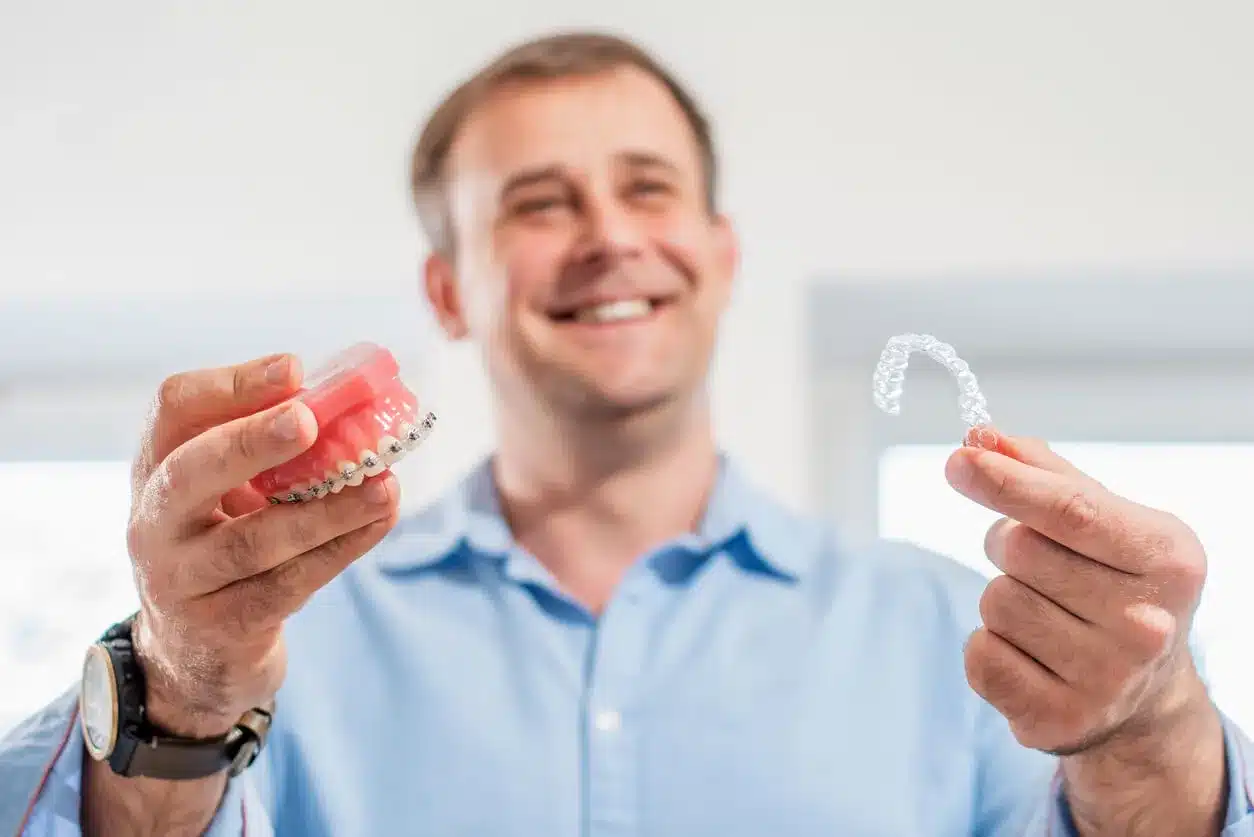

Both treatments are designed to address orthodontic issues, but they come with distinct features and benefits. This article will clarify these options, offering a detailed overview to help you make an informed choice that aligns with your dental needs.
Types of Orthodontic Issues
Orthodontic issues can affect the alignment and health of your teeth and jaws. Here are some common types:
- Crowding. Crowding occurs when there is insufficient space in the dental arch for all the adult teeth. This can lead to overlapping and crooked teeth, making it difficult to maintain good oral hygiene.
- Spacing. Spacing issues refer to gaps or spaces between teeth, often resulting from missing teeth or a jaw that is too large for the teeth’ size. These issues can impact the aesthetic appearance of your smile.
- Crossbite. A crossbite happens when one or more upper teeth fall inside the lower teeth when biting down. If not corrected, this misalignment can cause tooth wear and affect jaw growth.
- Overbite. An overbite, or deep bite, is when the upper front teeth significantly overlap the lower front teeth. This issue can lead to excessive wear on the lower teeth and potential jaw discomfort.
- Underbite. An underbite occurs when the lower teeth protrude past the upper teeth, often giving a bulldog-like appearance. It can impact both the function and comfort of your bite.
- Open Bite. An open bite is when there is a noticeable gap between the upper and lower front teeth when the back teeth are closed. This condition can affect speech and eating efficiency.
- Misaligned Midline. A misaligned midline refers to the centerline of the upper front teeth not aligning with the centerline of the lower front teeth. Although it may be less noticeable, it can indicate or cause other orthodontic problems.
- Impacted Teeth. Impacted teeth occur when a tooth fails to fully emerge from the gum line, often becoming stuck against another tooth or bone. Wisdom teeth are commonly impacted.
What Is Invisalign?
Invisalign aligners are a modern approach to teeth straightening using clear trays or aligners customized for your teeth. This orthodontic treatment begins with an initial consultation to assess your eligibility and needs. Your dentist will then create a treatment plan that includes wearing aligners that fit snugly over your teeth to gradually shift them to their correct position.
How Does Invisalign Work?
Invisalign aligners are created using 3D scanning technology to tailor the fit to your individual dental structure. Each set of aligners applies different levels of pressure, which you have to change every two weeks.
By wearing these aligners for 20-22 hours a day, Invisalign effectively addresses various orthodontic issues while allowing for easy removal during meals and dental hygiene routines.
Pros
- Invisible aligners offer a discreet treatment option, making them a popular choice for adults and teens who prefer to straighten their teeth without noticeable braces.
- The removable aligners allow for greater convenience in maintaining oral hygiene, letting patients brush and floss easily.
- Invisalign is generally more comfortable as there are no metal wires to irritate the gums and mouth.
Cons
- For effective treatment, patients must comply with wearing aligners for 20-22 hours a day, which requires discipline and commitment.
- Invisalign might not be suitable for severe orthodontic issues that require the precision of traditional braces.
- The cost of Invisalign can be higher, and dental insurance coverage varies, potentially making this option more expensive upfront.
What Are Braces?
Traditional braces involve the use of metal or ceramic brackets attached to the teeth, connected by metal wires. Various types of braces include:
- Traditional Metal Braces. Durable and effective for all dental issues
- Ceramic Braces. Similar to metal but less visible
- Lingual Braces. Attached behind the teeth, making them invisible from the front
Pros
- Braces treatment is effective for correcting both simple and complex dental issues, including severe misalignment and bite problems.
- They don’t require consistent wear compliance, as they are fixed to the teeth for continuous orthodontic correction.
- Traditional braces are known for their durability, providing reliable treatment results for patients of all ages.
Cons
- The visible appearance of metal brackets and wires can impact self-confidence for some patients during treatment.
- Dietary restrictions are necessary to prevent damage to the braces, limiting consumption of sticky and hard foods.
- Adjustments can lead to discomfort and soreness, particularly after adjustment appointments.
Comparing Invisalign and Braces
Here’s a quick comparison of Invisalign and braces:
| Factor | Invisalign | Braces |
| Effectiveness for Different Cases | Most effective for moderate misalignments and alignment issues. | Suitable for both simple and complex cases, including severe dental misalignment. |
| Treatment Duration | Typically requires 12-18 months for treatment success. | Generally ranges from 18-24 months, depending on the complexity of the dental issues. |
| Cost and Insurance Coverage | Typically higher initial costs, with some insurance coverage depending on the policy. | Often more budget-friendly with substantial dental insurance coverage. |
| Maintenance and Care | Easy maintenance, though users should avoid very hot drinks that might warp aligners. | Requires detailed oral hygiene practices to prevent plaque buildup around brackets. |
| Lifestyle Impact | Minimal lifestyle disruption, with no dietary limitations and a discreet treatment option. | Requires some lifestyle changes, especially with dietary restrictions and adjustments. |
| Age and Suitability | Ideal for adult patients and teens seeking minimal aesthetic impact. | Suitable for adult teeth and all ages, providing comprehensive treatment. |
Braces or Invisalign: Choosing the Right Option for You
Choosing between Invisalign and braces requires careful consideration of various factors to match your personal needs and circumstances. Keep these considerations in mind to make a well-informed decision:
Professional Assessment
Getting a professional assessment from an experienced orthodontist or dentist is crucial in determining the right orthodontic treatment option for you. They can evaluate the complexity of dental issues and guide you in choosing between Invisalign and braces.
Consideration of Lifestyle and Aesthetics
Your lifestyle and aesthetic preferences play a significant role in choosing between aligners and braces. Invisible aligners provide a discreet option that may be suitable for those concerned about appearance, while traditional braces might be preferred by those who prioritize comprehensive correction.
Budget Considerations
The cost of braces treatment and Invisalign varies, so it’s important to consider your budget. Review your dental insurance plans to understand what coverage is available for each option and explore any flexible payment plans offered by orthodontic practices.
Commitment and Convenience Aspects
Invisalign requires a commitment to wearing the aligners for 20-22 hours daily. If you prefer a treatment that is less dependent on daily commitment, braces treatment might be more convenient as they work continuously without removal.
Long-term Goals for Orthodontic Treatment
Consider your long-term goals for achieving the perfect smile. Both Invisalign and conventional braces have proven effective in achieving straighter teeth, but each option might align differently with your treatment goals and desired outcomes.
Reveal Your Best Smile With Us Today!
Choosing between Invisalign and braces is essential for achieving a confident smile that suits your personal preferences, lifestyle, and dental needs to improve your oral health. Each treatment offers distinct advantages; Invisalign provides discretion and comfort, while traditional braces offer a robust solution for more complex cases. Weigh the options carefully and discuss them with your orthodontist to find the best fit for your goals.
Are you ready to take the next step toward a perfect smile? Contact Alpharetta Smile Care today to schedule a consultation with our experienced team. We are dedicated to providing personalized orthodontic solutions tailored to your unique needs. Call us to find out how we can help you achieve the smile you’ve always dreamed of.