
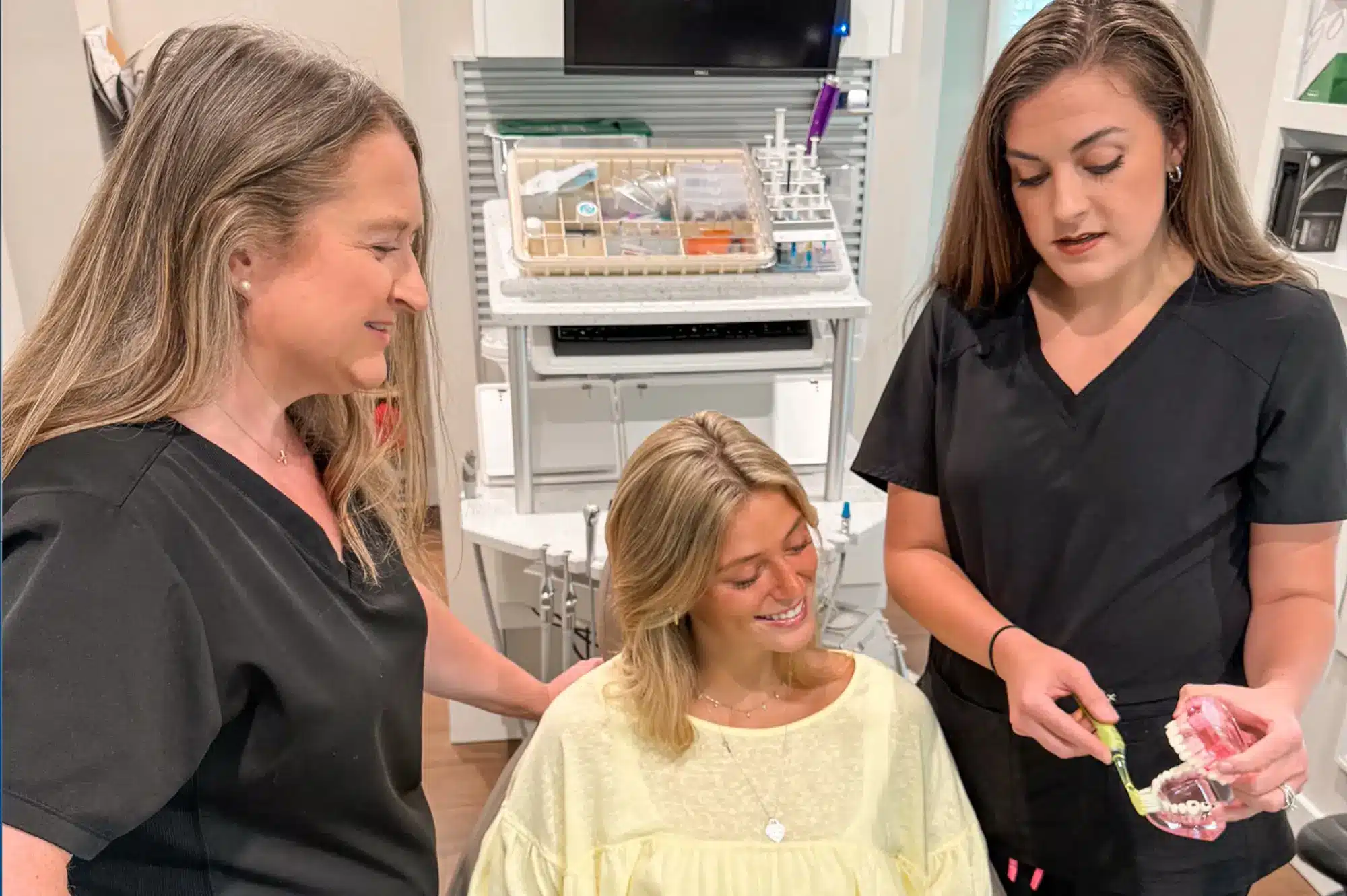

How Dental Bridges in Alpharetta Work
A dental bridge is a fixed restoration that spans the space left by one or more missing teeth. It consists of an artificial tooth, called a pontic, held in place by crowns that are placed over the healthy teeth on either side of the gap. The supporting teeth are called abutment teeth, and once the bridge is cemented in place, the whole structure stays permanently in place.
The process typically involves two appointments. During the first, Dr. Doug Worful prepares the abutment teeth by reshaping them slightly so the crowns fit properly, takes impressions, and places a temporary bridge while the permanent one is being made. At the second appointment, the temporary bridge comes off, and the permanent one is fitted, adjusted, and bonded in place. Most patients find the process much more straightforward than they expected.
The Benefits of Choosing a Fixed Bridge
Dental bridges in Alpharetta solve several problems at once, which is part of why they’ve remained a dependable tooth replacement option for so long. Here’s what a bridge actually does for your oral health beyond filling a visible gap:
- Prevents neighboring teeth from drifting into the empty space over time
- Restores your ability to chew comfortably on both sides of your mouth
- Helps maintain the natural shape of your face, since bone loss after tooth loss can affect facial structure
- Improves speech clarity in cases where missing teeth cause lisping or other changes
- Distributes bite pressure more evenly across your remaining teeth
That combination of functional and structural benefits makes a bridge more than a cosmetic fix. It’s a long-term investment in how your mouth works.
Dental Bridges vs. Other Tooth Replacement Options
Patients often ask how bridges compare to implants or partial dentures, and the honest answer is that each option has its place depending on the situation.
Dental implants replace both the root and the crown, making them the closest thing to a natural tooth. They’re an excellent long-term option, but they do require surgery, sufficient bone density, and a healing period that can span several months. Not every patient is a candidate, and the timeline isn’t right for everyone.
Partial dentures are removable, which some patients prefer, but that removability can also be a drawback. They can shift while eating or speaking, yet they don’t do anything to prevent jawbone loss.
Dental bridges sit in a practical middle ground. They’re fixed, non-surgical, and can replace one or more consecutive missing teeth in a single restoration. If you’re looking for a stable, lasting result without the commitment of implant surgery, a bridge is often the most sensible path forward. We’ll go over all your options at your appointment so you can make a decision that fits your health, your timeline, and your budget.
What to Expect During Your Appointments
Most patients are pleasantly surprised by how manageable the bridge process is. Here’s a simple breakdown of what to expect:
First appointment: The abutment teeth are prepared, impressions are taken, and a temporary bridge is placed to protect the area while your permanent restoration is being fabricated.
Second appointment: The temporary bridge is removed, and the permanent bridge is checked for fit and bite before being permanently cemented.
Between appointments, the temporary bridge keeps the area functional and protected. Some patients experience mild sensitivity around the prepared teeth during this period, which is normal and resolves once the permanent bridge is placed.
After the final placement, there’s no recovery period. You can eat normally once any anesthetic wears off, though we do recommend being gentle with very hard or sticky foods in the first few days while you adjust.
Caring for Your Bridge Long-Term
A well-maintained dental bridge can last ten to fifteen years or longer. The key is keeping the area clean, particularly underneath the pontic, where bacteria and food debris can collect.
A few habits that make a real difference:
- Floss under the bridge daily using a floss threader or water flosser.
- Brush twice a day with a soft-bristled brush, focusing on the gum line around the crowns.
- Avoid biting down on very hard foods like ice or hard candy that could crack the bridge.
- Keep up with regular checkups so we can monitor the fit and condition of the restoration over time.
Small, consistent habits go much further than occasional deep cleaning when it comes to keeping a bridge in good shape.
Talk to Us About Dental Bridges in Alpharetta
If a missing tooth has been affecting your comfort, confidence, or ability to eat normally, a bridge might be exactly what you need. Call Alpharetta Smile Care to schedule a consultation, and we’ll take a close look at your situation, answer your questions honestly, and help you figure out the best path forward.