

What Are Dental Sealants and How Do They Work?
Dental sealants are thin protective liquids applied to the chewing surfaces of your back teeth. They act as a shield, covering the pits and grooves where food particles often get trapped. Blocking these areas helps prevent cavities and tooth decay.
Sealants are very thin and blend in with your teeth, so they’re hardly noticeable. Once in place, they provide a strong barrier, especially on permanent teeth, to keep them healthy and protected.
Who Should Get Dental Sealants?
Sealants are not just for children; they can benefit others, too. Here’s who might consider them:
- School-Aged Children and Teens: Perfect for kids and teenagers to protect their growing teeth.
- When Permanent Molars Appear: This is typically applied when the first and second molars come in, around ages 6 and 12.
- Children With Deep Grooves on Baby Teeth: Younger kids with pronounced grooves can benefit, as sealants cover these areas and prevent decay.
- Adults Prone to Cavities: Even adults can benefit, particularly those individuals with deep grooves in their teeth who are susceptible to decay.
- People With a History of Oral Health Issues: Anyone who frequently experiences cavities might find sealants useful as an additional layer of protection.
Where and When Sealants Are Usually Applied
Sealants are usually placed on the back teeth, especially the chewing surfaces. These are areas where toothbrush bristles often can’t reach, making them prone to cavities.
The best time to apply sealants is shortly after the first and second permanent molars come in, which usually happens around school age, roughly between ages 6 and 12. Applying sealants at this stage helps protect these important teeth early on, giving them a strong defense against tooth decay as children grow.
Are Dental Sealants Safe for My Child?
Yes, dental sealants are safe for your child. They’ve been a trusted method for many years, and dental professionals recommend them to help prevent oral health problems. Concerns about their safety are minimal, with many studies supporting their use in children.
A guideline from dental experts, including the American Academy of Pediatric Dentistry (AAPD) and the American Dental Association (ADA), recommends putting sealants on the chewing surfaces of children’s and teens’ back teeth because they are very effective at preventing cavities and stopping early tooth decay from getting worse. Although sealants may briefly expose kids to a tiny amount of BPA, research shows this small amount is not a health concern.
In addition, the Centers for Disease Control state that sealants are highly effective in preventing cavities. They prevent 80% of cavities over two years in the back teeth, where most cavities happen. For school-age children (ages 6–11) who don’t have sealants, the risk is almost three times higher for cavities in their first molars compared to those with sealants. This highlights the importance of sealants in protecting your child’s teeth from decay.
So, when wondering, “Should I seal my child’s teeth?” Given their proven effectiveness and minimal safety concerns, supported by numerous studies, sealants are a reliable choice for protecting your child’s smile.
What to Expect in the Dental Sealant Procedure
What happens during a dental sealant appointment? Here’s a detailed look at the steps involved:
- Tooth Cleaning: The dentist begins by thoroughly cleaning your kid’s teeth to remove any plaque and food particles, making the surface spotless.
- Polishing: Gritty toothpaste and a special polishing brush are used to smooth the tooth surface, which helps the sealant adhere better.
- Preparing Solution: A solution is gently applied to the tooth. This prepares the surface to hold the sealant securely by creating tiny grooves.
- Rinsing and Drying: After the etching process, the preparing solution is rinsed off, and the tooth is dried. This step makes sure that the tooth is ready for the sealant.
- Applying Sealant Material: The dentist carefully paints the liquid sealant onto the tooth, paying special attention to the chewing surfaces where cavities often start.
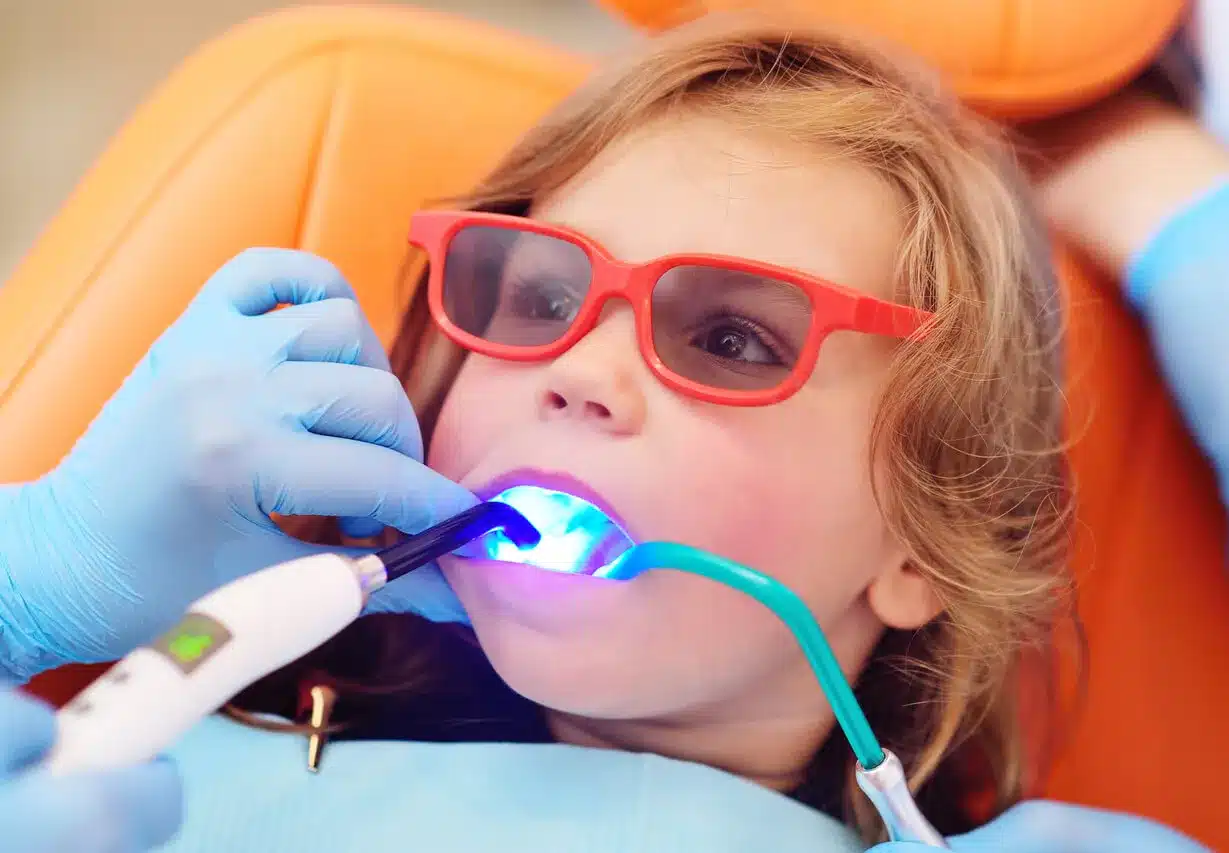
- Curing With Light: A special blue curing light hardens the sealant quickly, forming a strong, protective barrier over the tooth.
Dental sealant placement is quick and usually painless, making it perfectly suited for children, even those with a sensitive gag reflex. With these steps, your child’s teeth gain extra protection against cavities.
Dental Sealants for Kids: Pros and Cons
Learning the benefits and potential drawbacks of dental sealants for your child is essential.
| Pros | Cons |
| Helps protect tooth surfaces by preventing cavities | May require reapplication every few years |
| Quick and non-invasive procedure, often completed in one visit | Insurance coverage for sealants can vary widely |
| Endorsed by the American Dental Association | Not a permanent solution and may wear off over time |
| Easily applied, even in difficult-to-reach areas | Some children might feel brief discomfort |
| Supports long-term oral health and reduces future dental visits | Not suitable for teeth with significant decay |
| Effective in maintaining oral health during critical growth years | Slight risk of allergic reactions in sensitive individuals |
What Are Some Other Ways to Prevent Cavities in Children?
Preventing cavities is an ongoing process that involves more than just applying dental sealants. Here are some additional effective strategies:
- Regular Brushing and Flossing: Make sure your kid flosses daily and brushes twice a day with fluoride toothpaste to clean away plaque.
- Fluoride Treatments: Regular fluoride applications by a dentist can strengthen teeth and help resist decay.
- Limit Sugary Snacks: Choose healthier snacks like fruits and vegetables instead of sugary and sticky foods, as they can cause tooth decay.
- Encourage Drinking Water: Water consumption helps flush out food particles and maintain mouth hydration.
- Regular Dental Check-Ups: Schedule dental visits to a child dentist every six months to catch any issues early and monitor your kid’s oral health.
- Mouth Rinse: Try an antibacterial mouth rinse to lower bacteria and plaque.
- Chew Sugar-Free Gum: After meals, chew sugar-free gum to increase saliva, which helps neutralize acids.
- Healthy Diet: Encourage your kid to follow a diet plenty in calcium and vitamins for strong teeth.
Protect Little Smiles With Alpharetta Smile Care: Book Your Consultation Today
Thinking about dental sealants for your child? At Alpharetta Smile Care, we’re here to help. Our friendly team guides you on how dental sealants can protect and brighten your child’s smile. From expert sealant applications to routine check-ups, we focus on keeping your child’s teeth healthy and strong.
Ready to take the next step in caring for your child’s dental health? Call us to book an appointment today. Together, we’ll create a customized plan that meets your child’s needs and supports their dental well-being.