
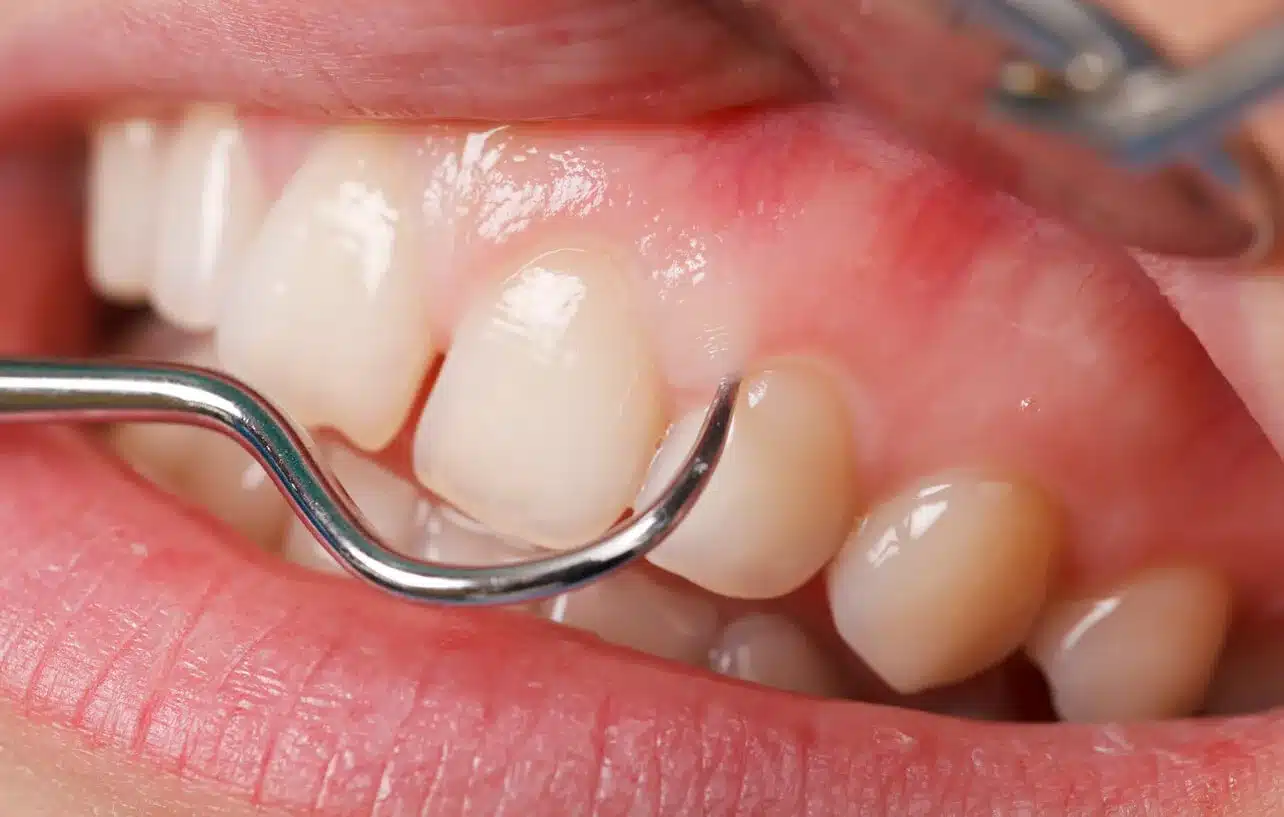

What Are Receding Gums?
When gum tissue pulls back, more of your tooth or its root becomes exposed. This can result in noticeable changes in your gum line and heightened tooth sensitivity. It’s important to be aware of the early signs, which include:
- Swollen gums
- Bleeding gums
- Increased tooth sensitivity
- A visible change in your gum line
- Teeth appearing longer than usual
Identifying these symptoms early can help you take steps to prevent further gum issues and maintain your oral health.
What Causes Receding Gums?
Receding gums can result from a multitude of factors, each impacting your oral health differently. Learning these causes can help you make informed decisions about your dental care.
- Aggressive Brushing: Overenthusiastic brushing, especially with a hard-bristled toothbrush, can damage the delicate gum tissue. This wear and tear makes gums recede, exposing sensitive roots.
- Gum Disease: Chronic conditions like periodontal disease are major contributors. Over time, infection and inflammation erode the gum line, leading to recession.
- Poor Oral Hygiene: Failing to maintain good oral hygiene leads to plaque and tartar buildup. This accumulation irritates the gums and can cause them to shrink away from the teeth.
- Lifestyle Choices: Use of tobacco products and smoking are harmful to gum health. Additionally, grinding your teeth, especially at night, puts pressure on gums, increasing recession risk.
- Genetic Factors: Some people are predisposed to gum issues due to their genetic makeup. If your family has a history of gum problems, you might be more susceptible.
- Gender and Habits: Research indicates men are more prone to gum recession, particularly those who smoke or consume alcohol, elevating their risk.
- Plaque Buildup: The presence of bacteria on your teeth forms plaque, which hardens into tartar if not removed. This buildup leads to inflammation and compromises gum health.
- High Frenulum: The frenulum, the tissue connecting the lip or cheek to the gum, can sometimes be positioned in a way that contributes to gum recession if it exerts too much tension on the tissue.
- Physical Trauma: Biting or chewing with excessive force, known as occlusal trauma, can injure the teeth and gums, prompting recession.
- Gum Disease History: If you’ve had gum disease or undergone periodontal treatment before, you may have a higher risk of future gum recession.
Is It Possible to Reverse Receding Gums?
No, receding gums don’t naturally grow back. However, some treatments can enhance gum health and improve the appearance of your gums. Options like soft-tissue grafts and regular dental care can help manage symptoms and prevent further recession, effectively addressing the condition.
Treatments for Receding Gums
If you’re experiencing receding gums, understanding how to reverse receding gums involves a comprehensive approach that combines professional treatments and diligent at-home care.
Professional Treatments
Scaling and Root Planing
This is a deep-cleaning technique that goes beyond a regular dental cleaning. Dentists thoroughly clean the pockets formed by receding gums, removing plaque and tartar buildup. Smoothing the root surfaces helps gums reattach to the teeth, reducing depth and halting further recession. It’s an essential step for stopping the progression of gum disease.
Gum Graft Surgery
For individuals with significant gum recession, gum graft surgery may be recommended. This involves taking tissue from the roof of your mouth or using donor tissue to cover the exposed roots. This not only protects your roots but also restores the natural gum line, improving both function and appearance. Recovery from this procedure is generally quick, and it significantly enhances gum stability.
Laser Therapy
An innovative addition to traditional methods, laser therapy can precisely target and remove inflamed gum tissue without affecting healthy areas. This minimally invasive option promotes faster healing and decreases discomfort, making it a popular choice for managing gum recession.
Tissue Stimulating Protein
This innovative treatment involves applying a protein-rich gel directly onto the affected areas. This protein encourages the regrowth of healthy gum tissue around exposed roots, aiding in regeneration and improving gum strength. It’s a promising option for those looking to bolster their gums without surgical intervention.
At-Home Care
Gentle Brushing
Switching to a soft-bristled toothbrush and employing a gentle brushing technique is vital. Harsh brushing can exacerbate recession, so focusing on gentle, circular motions helps maintain gum health and reduces irritation.
Antimicrobial Mouthwash
Including an antimicrobial mouthwash in your daily routine can significantly reduce the bacteria that cause gum inflammation. This simple step can prevent further recession and promote overall gum health.
Natural Remedies
For those experiencing mild gum recession, integrating natural remedies can provide additional support. Coconut oil pulling can reduce bacteria, and a warm saltwater rinse can soothe inflamed gums. These methods are excellent adjuncts to professional care, offering additional relief and promoting a healthier gum environment. Before using natural remedies for gum recession, consult with a dentist to confirm they are suitable for your condition.
Why Managing Receding Gums Matters
Taking care of receding gums is vital for maintaining your oral health. Here’s why it’s important:
- Prevent Sensitivity: When gums recede, the roots of your teeth are exposed, making them more sensitive to hot, cold, or sugary foods. This can cause discomfort during everyday activities like eating and drinking.
- Avoid Decay: Without the protective layer of gums, your teeth become more vulnerable to decay. Exposed roots are more prone to cavities since they lack the enamel that protects the rest of the tooth.
- Protect Against Tooth Loss: If receding gums are not addressed, they can cause more serious dental problems such as periodontitis. This advanced gum disease can result in tooth loss due to the destruction of supporting bone and tissue.
- Support Bone Health: Healthy gums support the bone that holds your teeth in place. When gums recede, the supporting bone can deteriorate, potentially making teeth loose and unstable.
- Maintain a Healthy Smile: Gums play a role in the aesthetics of your smile. Managing gum health helps preserve your natural smile and boosts your confidence.
- Improve Overall Health: Gum health is associated with overall health. Managing gum recession can help reduce the risk of health issues related to gum disease, such as heart disease and diabetes.
How to Prevent Gums From Receding Further
Many people ask, “Can receding gums be reversed?” While they can’t naturally grow back, proactive care is key. To protect your gums from further recession, adopting a comprehensive preventive approach is essential.
- Practice Good Oral Hygiene: Use a soft-bristled toothbrush to gently brush your teeth and gums twice a day. This prevents plaque buildup and avoids irritating sensitive gums. Also, floss daily to remove food debris and plaque from areas a brush can’t reach.
- Choose the Right Tools: Using a soft-bristled toothbrush can protect your gums from damage. Hard bristles and aggressive brushing can irritate and wear down the gum line over time.
- Avoid Harmful Habits: Stay away from tobacco products, which can weaken gums and make them more susceptible to disease. If you grind your teeth, consider wearing a night guard to reduce pressure on your gums and teeth.
- Stay on Top of Dental Visits: Dental checkups are key to keeping an eye on your gum health. These visits help catch early signs of gum issues, allowing for prompt intervention and personalized care.
- Adopt a Healthy Lifestyle: A diet rich in minerals and vitamins supports your gums. Foods with plenty of nutrients like calcium and vitamin C can strengthen gum tissue and surrounding bones. Regular exercise and effective stress management also contribute to overall gum health.
Set Up Your Dental Appointment With Us for Healthier Gums
Are you worried about receding gums or dealing with tooth sensitivity? Let us help you take charge of your oral health. At Alpharetta Smile Care, we’re ready to discuss your unique concerns and explore effective treatments tailored just for you. Our reliable dental team is committed to helping you get healthy gums and a confident smile.
Contact us today to schedule your consultation. Whether you prefer to call or book online, taking this first step is easy and important for your oral health.